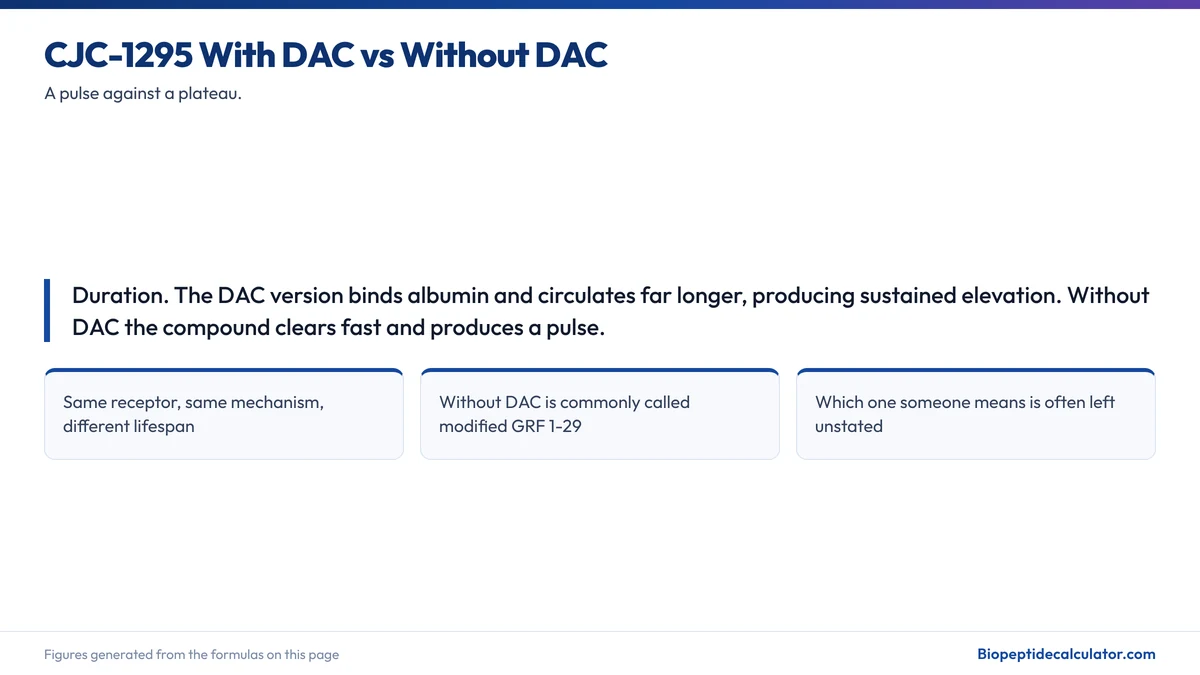
- Same receptor, same mechanism, different lifespan
- Without DAC is commonly called modified GRF 1-29
- Which one someone means is often left unstated
One modification, and it changes the whole shape of the response. Worth understanding before reading any protocol that names CJC-1295 without saying which.
The one difference
CJC-1295 is an analogue of growth hormone releasing hormone. The DAC in CJC-1295 with DAC stands for drug affinity complex, an added group that binds albumin in the blood and greatly extends how long the peptide circulates.
What DAC does mechanically
Albumin is the most abundant protein in blood plasma and persists for weeks.
A molecule that binds it reversibly is carried around rather than filtered out by the kidneys or broken down quickly. The DAC group exists to create that binding, so the peptide borrows albumin’s lifespan. The same strategy appears in approved peptide drugs, which is where it was proven to work.
Pulse versus sustained elevation
Growth hormone is normally released in pulses, not continuously.
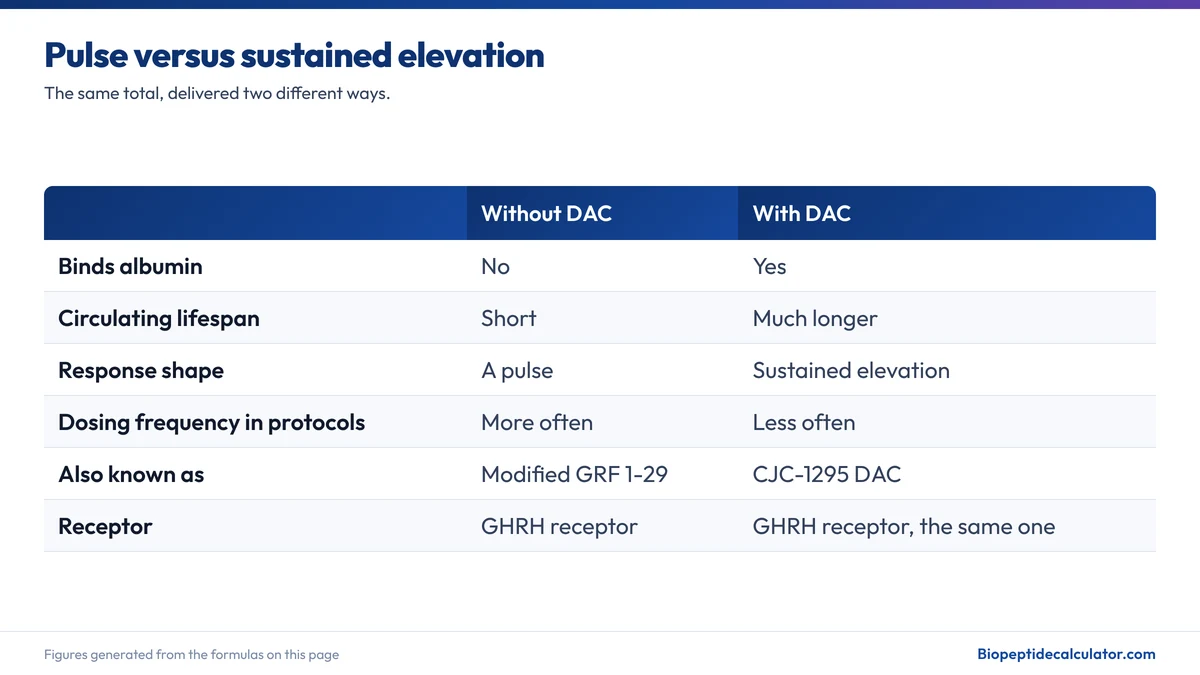
That matters because the body’s response to a hormone depends on the pattern of exposure, not only the amount. A compound producing pulses is closer to the natural pattern. A compound producing sustained elevation is further from it.
Why that distinction is argued about
Two positions, both reasonable on their face.
Neither position rests on a published human trial comparing the two, which is worth knowing before treating either as settled.
Naming confusion
This compound has a naming problem.
- CJC-1295 on its own is ambiguous and could mean either version.
- CJC-1295 DAC means the long-acting one.
- CJC-1295 no DAC and modified GRF 1-29 generally mean the short-acting one.
- Sermorelin is a different compound again, the plain first 29 residues with no modification.
The sermorelin page covers that last one.
Practical consequences
That last row is the practical argument for caution with the DAC version. A long lifespan is convenient until you want the compound gone.
Frequently asked questions
What is the difference between CJC-1295 with DAC and without DAC?
Duration, and nothing else fundamental. The DAC version carries a drug affinity complex that binds albumin in the blood, so it circulates far longer. Without DAC the compound is cleared quickly and produces a short pulse.
What does DAC stand for?
Drug affinity complex. It is an added chemical group whose job is to bind albumin, the most abundant protein in blood plasma, so the peptide is carried rather than cleared.
Is CJC-1295 without DAC the same as modified GRF 1-29?
In common usage yes. CJC-1295 without DAC and modified GRF 1-29 are generally used to refer to the same compound, which is a source of considerable naming confusion.
Which version is dosed more often?
The version without DAC has a short duration, so protocols using it dose more frequently. The DAC version circulates far longer and is dosed less often.
Does DAC change what the compound does?
Not the receptor it acts on. It changes how long it acts for, which changes the shape of the growth hormone response from a pulse to a sustained elevation.
Run your own vial and dose through the peptide dosage calculator.
Sources & Scientific References
The science on this page traces to the peer-reviewed and reference sources below. We link only to research and reference material.
Reference & Regulatory
- World Anti-Doping Agency: The 2026 Prohibited List, in force January 1 to December 31, 2026. – the official list, which names BPC 157 under S0 and TB 500 under S2.3
More at Bio Peptide Calculator
- What is CJC-1295 peptide – the compound itself
- What is ipamorelin peptide – the usual pairing
- What is sermorelin peptide – the unmodified fragment