How to Read a Peptide Dosage Chart Correctly
How to read a peptide dosage chart: the water volume assumption every chart hides, the columns it must include, and how to check one against your own vial.
How to read a peptide dosage chart: the water volume assumption every chart hides, the columns it must include, and how to check one against your own vial.
MOTS-c 10 mg dosing: concentration by water volume, units for common doses, which combinations exceed a 1 mL syringe, and a worked example.
IU to mcg for peptides: an international unit measures biological activity per substance, so no universal conversion exists. What IU means and where it applies.
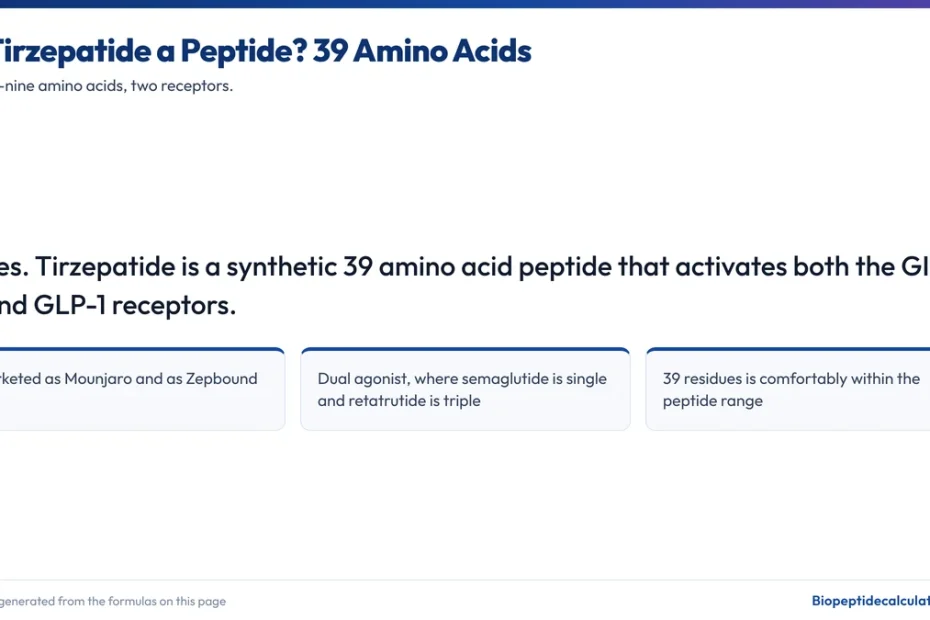
Is tirzepatide a peptide? Yes, a synthetic 39 amino acid dual GIP and GLP-1 agonist. How it compares with semaglutide and retatrutide.
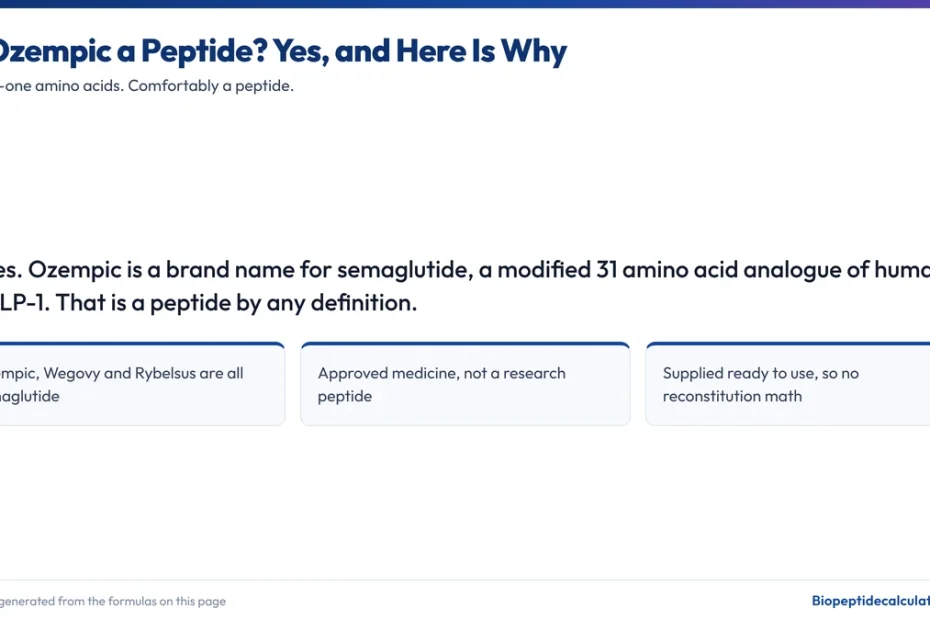
Is Ozempic a peptide? Yes. It is semaglutide, a modified 31 amino acid GLP-1 analogue. How it differs from natural GLP-1 and from research peptides.
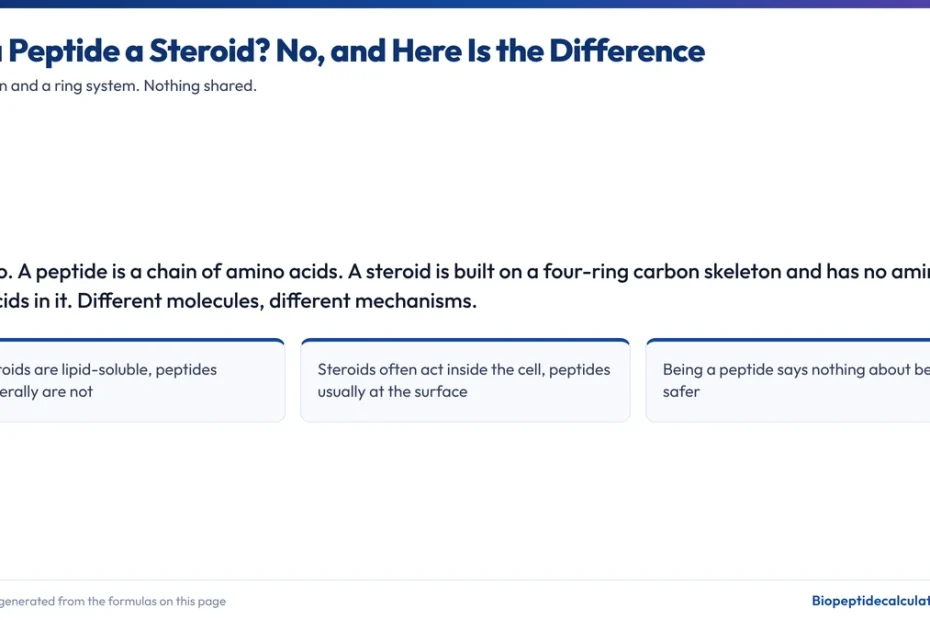
Is a peptide a steroid? No. Peptides are amino acid chains, steroids are four-ring carbon molecules. Structure, mechanism and why they get confused.
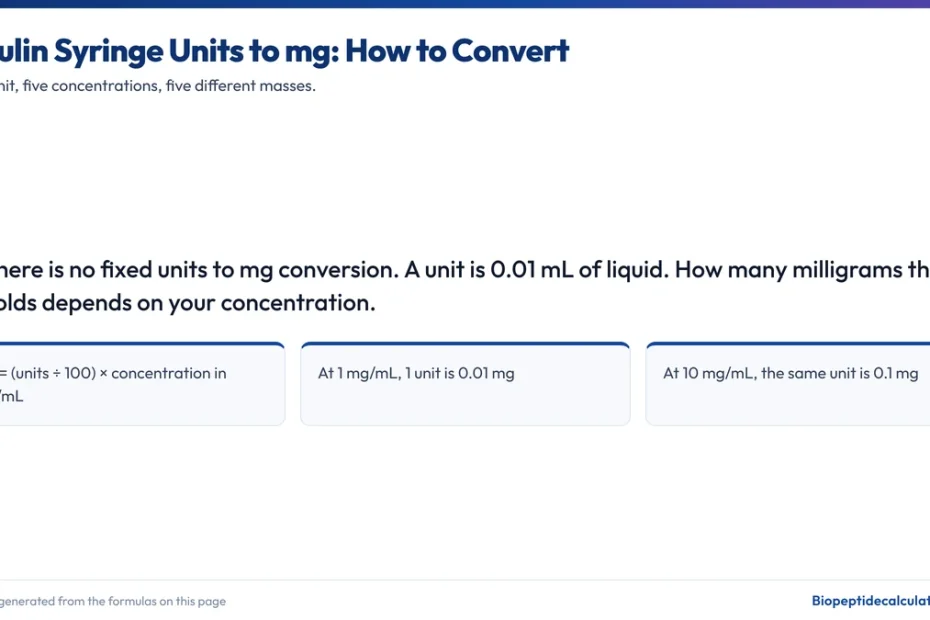
Insulin syringe units to mg: no fixed conversion exists, because a unit is a volume. The formula, tables by concentration, and why borrowed figures fail.
How retatrutide was administered in trials: once-weekly subcutaneous injection with gradual dose escalation, why escalation exists, and the reconstitution math.
Convert mg to mcg for peptide doses: multiply by 1000. A full conversion table, how to turn a dose into syringe units, and the decimal errors to avoid.
How much bacteriostatic water for a 5 mg peptide vial: what 1 mL, 2 mL and 5 mL each give you, how to choose by dose, and why doses per vial never change.