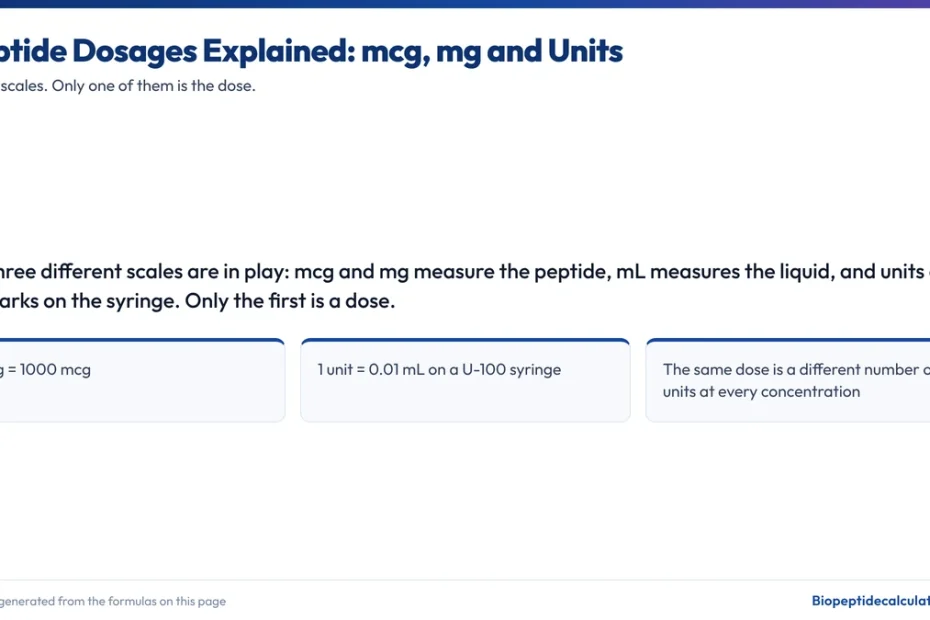
Peptide Dosages Explained: mcg, mg and Units
Peptide dosages explained: how mcg, mg, mL and syringe units relate, why a unit is not a dose, and how to convert a protocol into a mark on the barrel.
Peptide dosages explained: how mcg, mg, mL and syringe units relate, why a unit is not a dose, and how to convert a protocol into a mark on the barrel.
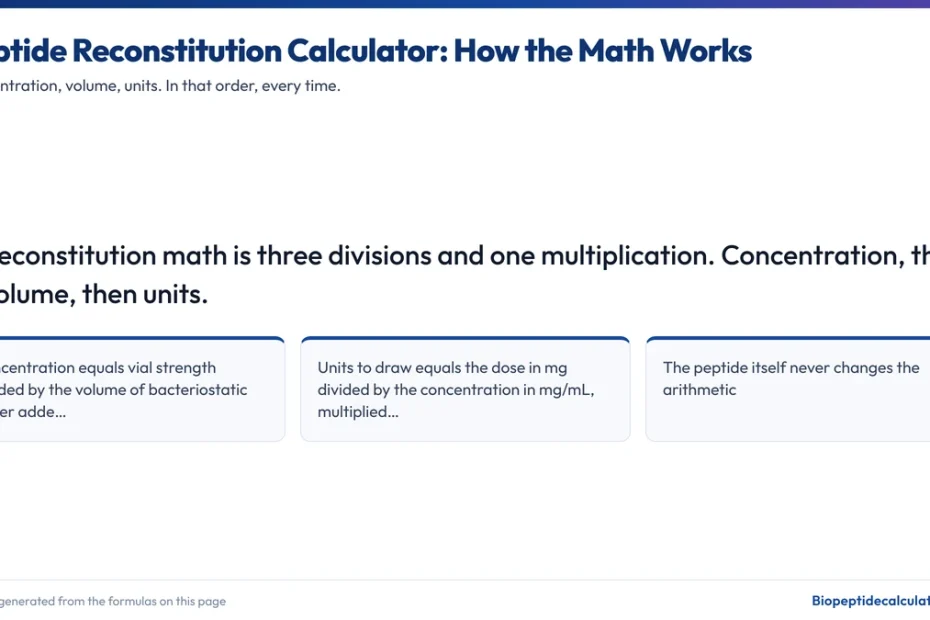
The peptide reconstitution formula in three steps, with concentration tables for every common vial size and a worked example you can check.
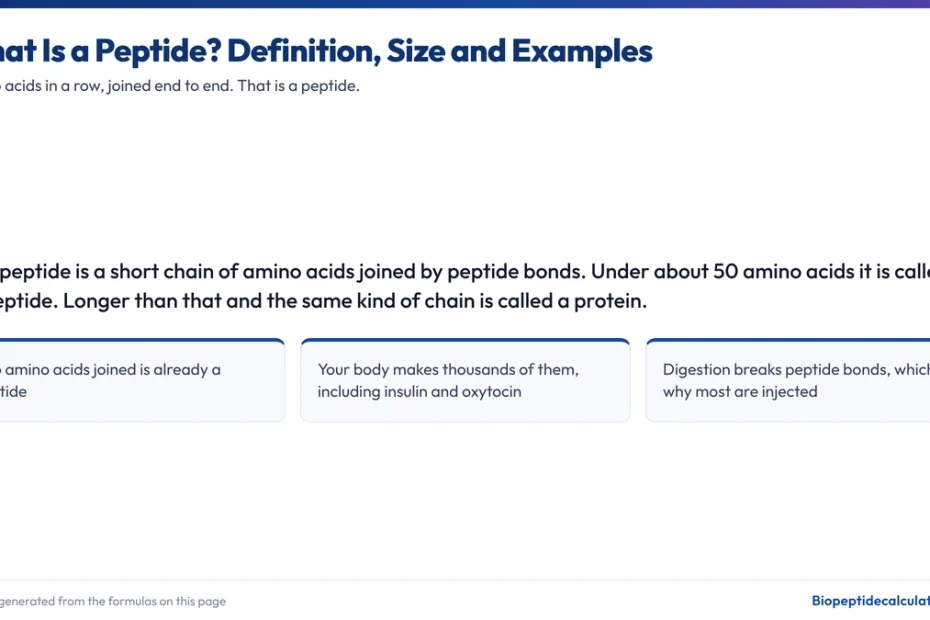
What is a peptide: a short chain of amino acids joined by peptide bonds. The definition, the peptide to protein boundary, and what is not a peptide.
What are peptide injections: why peptides are injected rather than swallowed, subcutaneous versus intramuscular, injection sites, needle sizes and rotation.
What is BPC 157 peptide: a synthetic 15 amino acid peptide with no published human trials. The real evidence base, the 2026 FDA changes and WADA status.
What is peptide therapy: approved drugs, compounded peptides and research chemicals are three different things. The 2026 FDA changes, explained precisely.
The Wolverine peptide stack is a marketing name for a BPC 157 and TB 500 blend. What is in it, the evidence position, and the dosing math for a blend vial.
What is retatrutide peptide: a triple GIP, GLP-1 and glucagon agonist. Phase 3 TRIUMPH-1 results, adverse events, dosing and regulatory status.
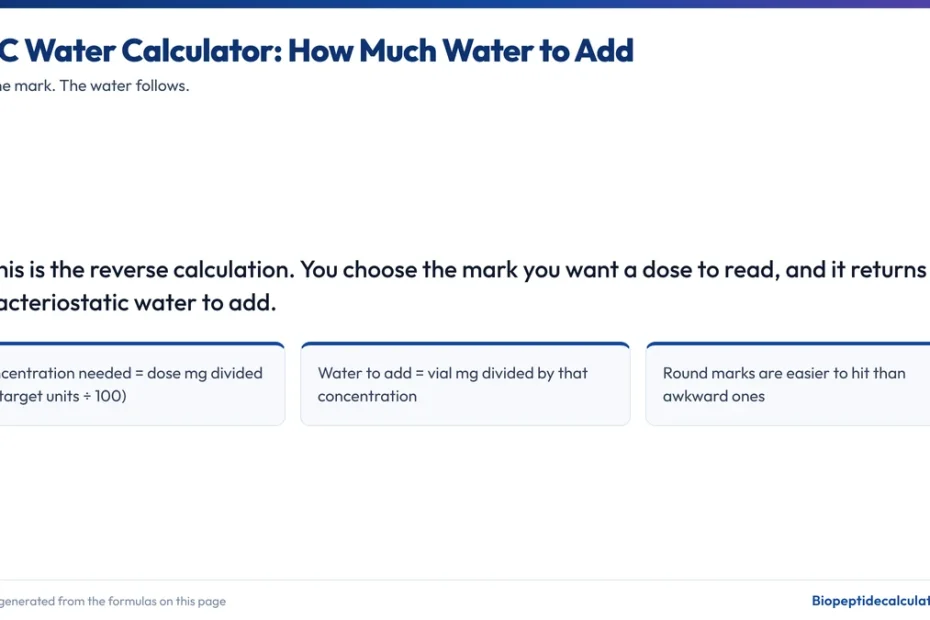
A BAC water calculator works backwards: choose the syringe mark you want, and it returns the bacteriostatic water to add. Formula, worked example and tables.
CJC-1295 with DAC versus without: DAC binds albumin and extends duration, turning a pulse into sustained elevation. Naming, arguments and consequences.