
- 1 mL gives 5 mg/mL, 2 mL gives 2.5 mg/mL, 5 mL gives 1 mg/mL
- The number of doses in the vial does not change either way
- Aim for a dose somewhere between 10 and 50 units
A 5 mg vial is the most common size there is, and this is the most common question about it. The answer is a preference, not a fact.
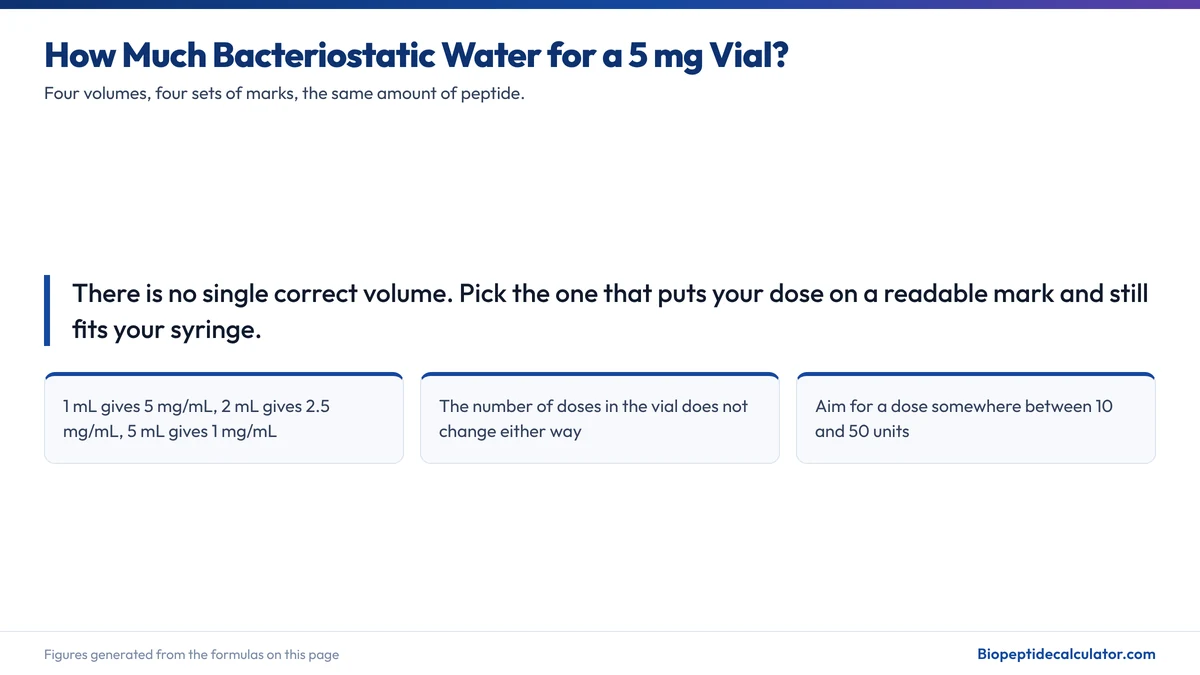
There is no single right answer
The vial does not care. Concentration equals vial strength divided by the volume of bacteriostatic water added, so a 5 mg vial reconstituted with 2 mL gives 2.5 mg/mL, and every volume you could reasonably choose produces a workable concentration.
What differs is how easy your particular dose is to measure.
What each volume gives you
Read down the column for your dose and pick a row with a number you can hit confidently on your barrel.
Choosing by the dose you want
Work backwards instead. Decide what you want a dose to read, and the water follows.
The readability window
Between about 10 and 50 units is the comfortable range.
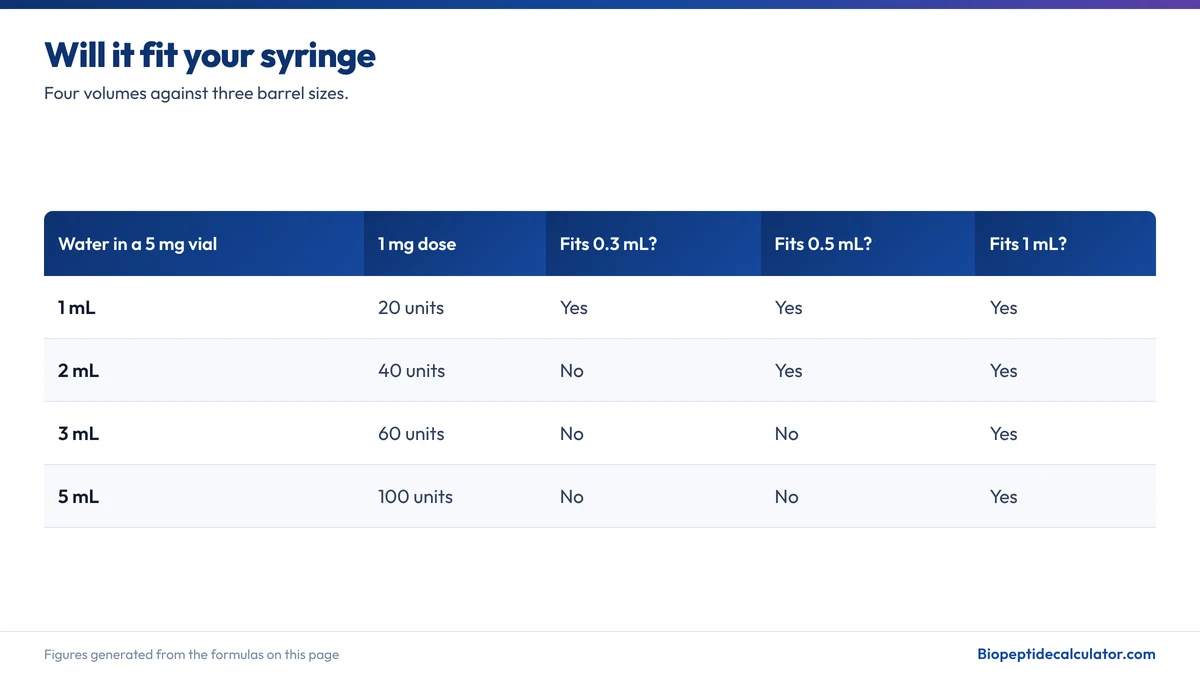
Below 10 units, a reading error of a single line is a large fraction of the dose. Above 50 units you are into the larger barrels, and above 100 it does not fit at all.
Will it fit your syringe
How long will the vial last
This is the argument against adding a lot of water, and it has nothing to do with arithmetic.
Once reconstituted, peptide is normally refrigerated and used within weeks rather than months, with the exact window depending on the peptide and the diluent.
Frequently asked questions
How much bacteriostatic water do you add to a 5 mg peptide vial?
Whatever makes your dose land on a readable mark and still fit your syringe. There is no single correct volume. Common choices are 1 mL, 2 mL and 5 mL, giving 5 mg/mL, 2.5 mg/mL and 1 mg/mL.
Does adding more water to a 5 mg vial give more doses?
No. A 5 mg vial holds 5 mg of peptide whatever you add. More water makes each dose a larger volume, which is easier to measure, but the number of doses is fixed by the dose size alone.
How much water for a 5 mg vial at 250 mcg per dose?
Five milliliters gives 1 mg/mL, which puts a 250 mcg dose at 25 units on a U-100 syringe. That is a comfortable mark to read, and the vial holds 20 doses either way.
Can you add 2 mL to a 5 mg vial?
Yes. That gives 2.5 mg/mL. A 250 mcg dose then reads 10 units, a 500 mcg dose 20 units and a 1 mg dose 40 units.
What happens if I add too much bacteriostatic water?
Nothing is ruined. Your concentration is lower than planned, so recalculate the units from the volume you actually added. The only real risk is a dose that no longer fits the syringe.
Run your own vial and dose through the peptide calculator.
Sources & Scientific References
The science on this page traces to the peer-reviewed and reference sources below. We link only to research and reference material.
Reference & Regulatory
- PubChem: Copper tripeptide-1. – the chemical database entry for the GHK-Cu complex
More at Bio Peptide Calculator
- BAC water calculator – solve for the water from the mark you want
- Peptide reconstitution calculator – the forward calculation
- How to reconstitute peptides – the mixing step itself